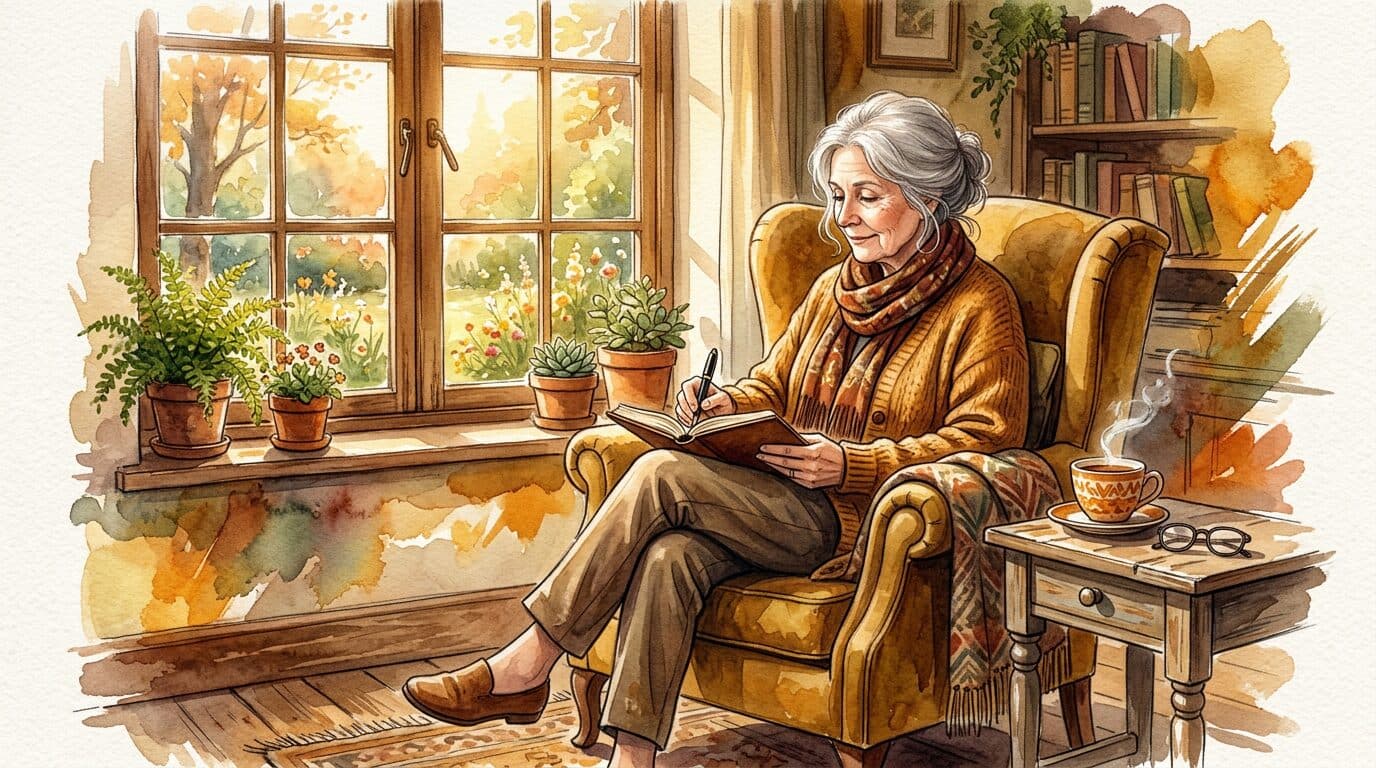
For decades, the answer to "What did you do today?" was obvious. You worked. You commuted. You managed. You provided. Now retirement has arrived, and the days are suddenly open in a way they have not been since childhood. Some people fill them easily. Others find themselves adrift, looking for a project that feels meaningful enough to justify the hours.
Writing your life story is that project. Not because it fills time, though it does. Because it gives purpose to the perspective you have spent a lifetime earning.
Why Retirement Is the Perfect Time
You finally have perspective. When you are in the middle of raising children, building a career, or navigating a marriage, you cannot see the shape of your own life. You are too close. Retirement provides the distance needed to look back and see the patterns: the decisions that mattered, the relationships that endured, the values that held, the lessons that took decades to learn.
This perspective is the most valuable ingredient in a life story. A twenty-five-year-old cannot write their life story because they have not lived enough of it. A sixty-five-year-old has both the material and the understanding to make sense of it.
You have the time. The most common reason people give for not writing their life story is "I do not have time." Retirement removes that excuse entirely. You have mornings. You have afternoons. You have rainy Sundays and quiet evenings and all the unstructured hours that working life never allowed.
A life story does not require marathon sessions. Fifteen minutes a day, three or four times a week, is enough to build something substantial within a few months. That kind of schedule is easy to maintain in retirement and nearly impossible during a working life.
You have the motivation. Something shifts in retirement. The future, which always felt infinite, starts to feel finite. Not in a morbid way, but in a clarifying one. The questions become: What do I want to leave behind? What do I want my family to know? What have I learned that is worth passing on?
These are the questions a life story answers. And they tend to feel most urgent and most satisfying to answer in the years after you stop working and start reflecting.
A Project with Structure and Purpose
One of the underappreciated challenges of retirement is the loss of structure. Work provided a daily rhythm, weekly milestones, and a sense of progress. Without it, days can blur together and the feeling of accomplishment fades.
A life story project restores that structure. Each recording session is a small milestone. Each finished story is a visible accomplishment. Watching the book grow, story by story, provides the kind of incremental progress that keeps a project satisfying over months.
It is also a project with a clear, meaningful outcome. Not a hobby for its own sake (though it can be enjoyable) but a creation that your family will treasure for generations. The knowledge that you are building something lasting adds weight and purpose to each session.
The Cognitive Benefits
The research on the science of telling your life story is compelling. Reminiscence, the structured recall and narration of life experiences, has documented cognitive benefits for older adults. It exercises memory retrieval, narrative construction, and emotional processing simultaneously. It keeps the mind active in ways that passive activities (watching television, reading) do not.
This is not to say you should write your life story as brain exercise. But if you are looking for a mentally engaging project that also produces something meaningful, you will not find a better combination.
Starting Does Not Require a Plan
Many retirees approach the idea of a life story as a massive organizational challenge. Eighty years of life, dozens of relationships, thousands of experiences: where do you even begin?
The answer is: anywhere. Literally anywhere. The memory that came to you in the shower this morning. The story you told at last week's dinner party. The photograph on your mantel that you have been meaning to explain to your grandchildren. Start there.
You do not need to plan a structure before you begin. You do not need to know how many stories you will tell or what order they will go in. You just need to tell one. Then another. Then another. The structure reveals itself over time, as patterns and connections between your stories become apparent.
Our guide on how to start your life story covers this in detail, including why the first story you tell matters far less than you think.
It Is Not Just About You
Your life story is your story, but it is not only for you. It is for your children, who want to understand the person behind the parent. It is for your grandchildren, who want to know where they come from. It is for the great-grandchildren you may never meet, who will someday want proof that you were a real person with real experiences, not just a name on a family tree.
Retirement is when you have the time and perspective to give them that gift. The stories you carry are not just personal memories. They are the family archive. Without you, they are gone.
Getting Started
If the idea appeals to you but the blank page feels daunting, know that you do not have to write a single word. With Journtell, you speak your memories the way you would tell them to a friend over coffee. Your Story Team (five specialized roles working together) handles the writing, the organization, and the voice preservation. You talk. They build the book.
No writing experience is needed. Our guide on writing your life story with no experience was written for exactly this situation. And if you want prompts to help you find the stories worth telling, our 100 life story prompts organized by decade will keep you going for months.
You have spent a lifetime accumulating stories. Retirement is when you finally have the time to share them. Start your life story today.
Ready to write your life story?
Journtell makes memoir writing effortless. Just speak or type your memories, and your Story Team turns them into a beautifully written book.
Start Writing Free