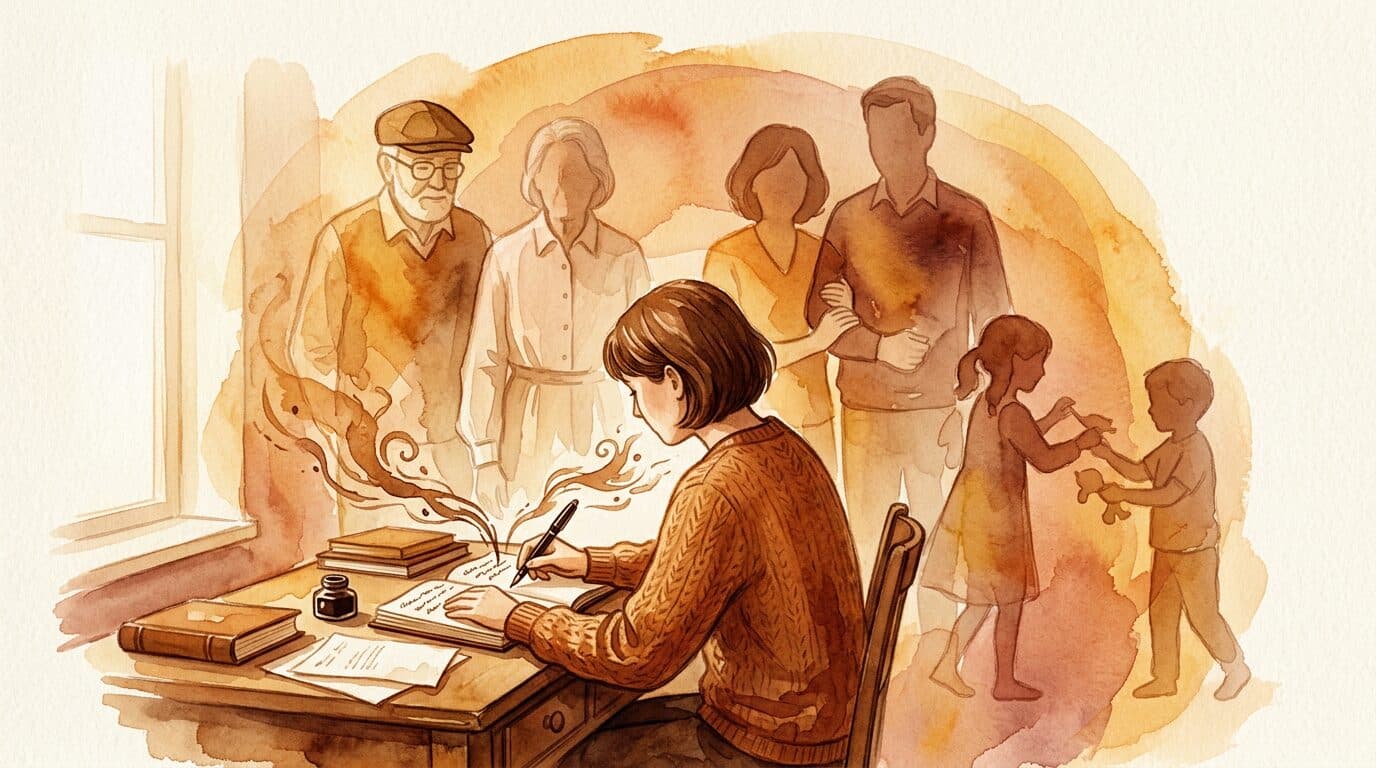
Your life story includes other people. It has to. No one lives in isolation. Your parents, your siblings, your spouse, your children, your friends, your colleagues: they are all characters in the story of your life, and you cannot tell your story honestly without telling parts of theirs.
This creates a tension that every memoir writer faces: how do you tell the truth about your own experience when that truth involves people who are alive, who might read what you wrote, and who might see things very differently?
There is no perfect answer. But there are practical frameworks that help.
Your Story Is Yours to Tell
The first principle is this: you have the right to tell your own story. Full stop. Your experiences, your feelings, your perspective on events you lived through belong to you. You do not need permission from the other people involved to describe how something felt to you.
This is different from telling someone else's story. If your sister went through a private struggle that she has not shared with the family, that is her story to tell or not tell. But if your sister's struggle affected you, the way it made you feel, what it taught you, how it changed your relationship, that is your story, and you have the right to tell it.
The distinction is between narrating your experience and exposing someone else's private life. You can say, "My brother's divorce was one of the hardest things our family went through. I felt helpless watching him suffer." You probably should not say, "My brother's divorce happened because his wife was having an affair with his business partner," unless your brother has given you permission.
Write About Impact, Not Just Events
The safest and most effective approach is to focus on how events affected you rather than cataloguing what other people did. This shift is not a compromise. It actually makes for better writing.
"My father was an alcoholic who ruined every family gathering" is a statement about someone else's behavior. "I spent every holiday watching the door, wondering which version of my father would walk through it" is a statement about your experience. The second version is more honest, more vulnerable, and more protected, because it describes your inner life rather than someone else's failings.
This does not mean you have to be vague or euphemistic. You can be specific about events while keeping the focus on what they meant to you. The reader will understand the full picture without you needing to prosecute anyone.
When to Use Real Names
In a family life story (as opposed to a published memoir for public audiences), most of the people you mention will be family members who will recognize themselves regardless of whether you use their names. Changing "my sister Margaret" to "my sister" does not provide any real anonymity when Margaret is going to read the book.
For family stories, the question is less about names and more about framing. If you are telling a story that involves your sister in a positive or neutral light, use her name. If you are telling a story that might embarrass or hurt her, consider these options:
Tell her in advance. "I am including the story about the summer we got lost in Vermont. Is that okay?" Most people are flattered to appear in a life story and will say yes. The ones who say no are telling you something important.
Soften without hiding. "My sister and I went through a period where we did not speak. I will not go into the details, but it was the loneliest year of my life." You have told your story (the loneliness) without exposing hers (the cause).
Focus on resolution. If a conflict with someone ended in reconciliation, telling the full arc (including the difficult middle) is usually safe because the ending reaffirms the relationship. "We did not speak for two years, and I missed her every day. When we finally talked, I understood things I had been too angry to see before."
The Conversation Before the Book
If your life story includes someone in a way that might surprise or challenge them, consider having a conversation before they encounter it in print. Not to ask permission (you do not need it for your own story), but out of care for the relationship.
"I am writing about some things from our childhood that were hard. I want you to know it is coming, and I want you to know I wrote it from my perspective, which is probably different from yours. If you want to talk about it, I am here."
This conversation does several things: it shows respect, it removes the shock of unexpected vulnerability, and it opens a dialogue that might actually strengthen the relationship. Some of the best family conversations happen because someone finally wrote down what everyone had been thinking.
Practical Guidelines
Here are concrete principles to follow:
Be generous. When describing someone's actions, assume the most charitable interpretation consistent with the truth. Your father may have been absent, but he may also have been struggling with something you did not understand at the time. Acknowledge that possibility.
Include your own flaws. A life story that only points outward, blaming others and excusing yourself, is not honest. If you were part of a conflict, say so. "I was difficult too" goes a long way toward making your account of others feel fair.
Do not settle scores. A life story is not the place to finally say what you always wanted to say to someone who hurt you. If your primary motivation for including a story is to make someone else look bad, that is a signal to reconsider. Tell the story from the perspective of what it did to you, not what they did to you.
Protect children and vulnerable people. If your story involves someone who was a child when the events occurred, or someone who is currently in a vulnerable position (elderly, ill, unable to respond), be especially careful. Their inability to contextualize or defend themselves creates an obligation to handle their story gently.
When Someone Objects
Even with care, someone in your life story may object to how they are portrayed. If this happens, listen. Understand their concern. But do not automatically remove the story. Your experience is valid even when someone else disagrees with your version of events.
You might adjust the telling. You might add their perspective alongside yours. You might soften language without changing meaning. But if the story is central to your experience and you have told it honestly, you are not obligated to erase it because someone is uncomfortable.
Our guide on writing about difficult memories covers how to approach sensitive material at your own pace. And for understanding why family members often remember the same events differently, our piece on when family members remember things differently explains the science behind competing versions of shared history.
Telling Your Truth, Carefully
The best life stories are honest, generous, and self-aware. They include the full range of human experience, including the complicated relationships, without weaponizing that honesty. They say: "This is how I experienced my life. I know others experienced it differently. This is my version, told with as much love and fairness as I can manage."
With Journtell, your Story Team understands the nuance of personal storytelling. They help you shape memories into stories that are honest and emotionally authentic while preserving your intent and your relationships.
For more on the complete process, our guide to writing your life story walks through every aspect. Start telling your story today.
Ready to write your life story?
Journtell makes memoir writing effortless. Just speak or type your memories, and your Story Team turns them into a beautifully written book.
Start Writing Free