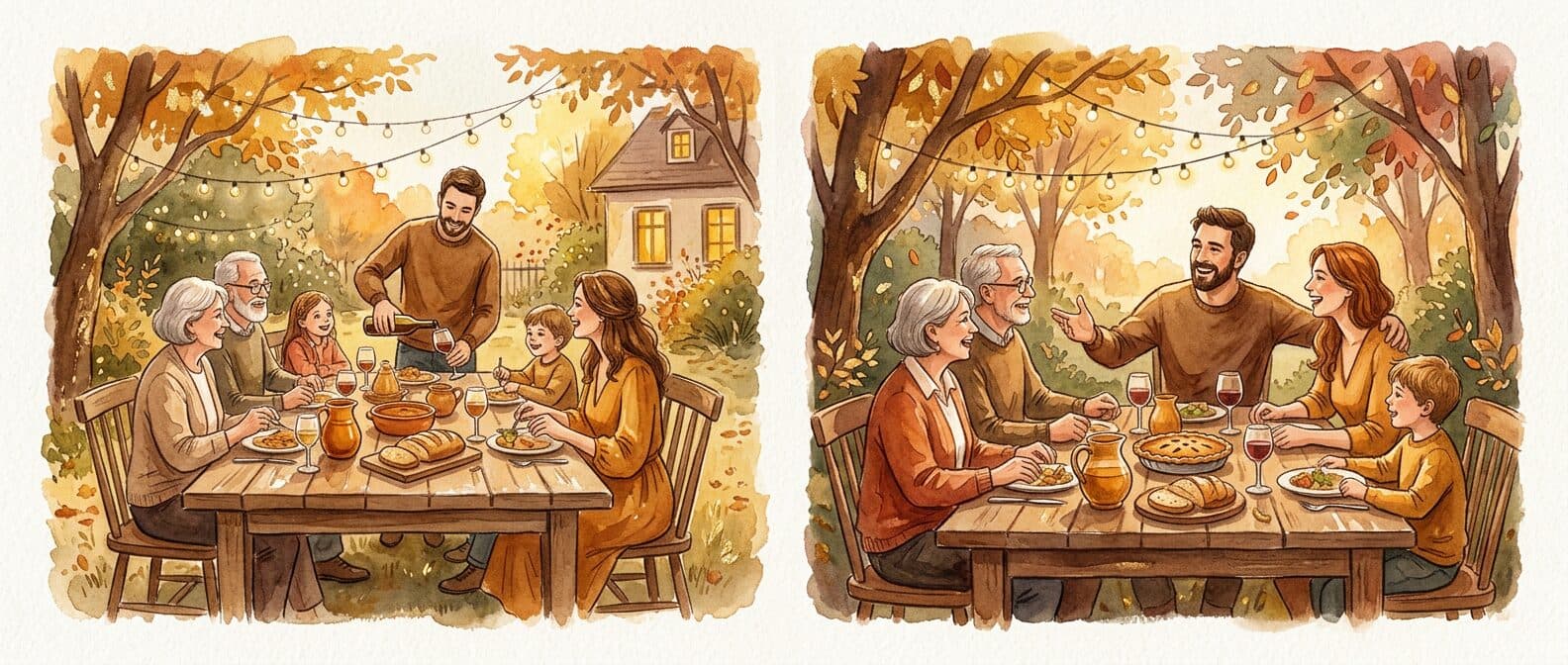
You tell a story about the family vacation to the lake house. Your sister says it was the beach. You remember Dad cooking burgers. She remembers Mom making sandwiches. You say it rained the whole time. She says it was the best weather of the summer.
This is not someone lying. This is how memory works. And if you are writing your life story or helping a family member write theirs, understanding this will save you a lot of unnecessary conflict.
Why Memories Differ
Memory is not a recording. It is a reconstruction. Every time you recall an event, your brain rebuilds it from fragments: sensory details, emotional associations, narrative patterns, and (importantly) everything you have experienced since. The rebuilt version is not a copy of the original. It is an interpretation, shaped by who you were when it happened and who you have become since.
This means two people who experienced the same event literally have different memories of it. Not because one is wrong, but because each brain stored and reconstructed the event differently. Several factors contribute:
Attention. People notice different things. At a family dinner, one child was paying attention to the conversation between the adults. Another was watching the dog under the table. A third was focused on the dessert. Each recorded a different version of the same hour.
Emotion. The emotional state during an event shapes what gets stored. If you were anxious at a family gathering, you might remember the tension and the argument. Your brother, who was happy that day, might remember the laughter and the games. Both were present. Both are telling the truth.
Age. A seven-year-old and a seventeen-year-old experience the same family event in fundamentally different ways. The seven-year-old remembers the physical details (the house, the food, the games). The seventeen-year-old remembers the social dynamics (the argument, the tension, the undercurrents).
Narrative over time. Memories shift with each retelling. Every time you tell a story, you subtly reshape it, emphasizing some parts, dropping others, adjusting the sequence. After decades of retelling, your memory of an event may have more in common with the story you have been telling about it than with the original experience.
Both Versions Can Be True
The most freeing realization is this: conflicting memories are not a problem to solve. They are a feature of how families work. Your version of the family story is true. Your sister's version is also true. Both are accurate representations of how each of you experienced the same life.
A life story is not a police report. It is not trying to establish an objective record of what happened. It is trying to capture how one person experienced their life, and that experience is inherently subjective. Your memories are your truth, and they are valid regardless of whether anyone else remembers it the same way.
How to Handle Disagreements
When a family member challenges your version of a shared memory, here are approaches that work:
Acknowledge their version without abandoning yours. "That is interesting. You remember it as sunny. I remember it as rainy. Maybe we are thinking of different years, or maybe we are both right about our own experience of it." This is not a concession. It is an honest recognition that memory is subjective.
Include the discrepancy. Sometimes the most interesting thing about a memory is that the family remembers it differently. "My sister will tell you we stayed at the beach that summer. I remember a lake house with a dock that leaned dangerously to one side. We have argued about this for thirty years, and neither of us has budged." This kind of honesty adds charm and authenticity to a life story.
Let factual details go. If the disagreement is about a verifiable fact (the year, the location, someone's age), and it matters to someone, look it up. But if the disagreement is about subjective experience (was it fun? was it tense? was the food good?), there is no fact to verify. Both impressions are equally valid.
Do not make it a battle. Your life story is your perspective. It does not need to be ratified by every family member. If your brother remembers your childhood differently, his perspective is welcome in his own life story. It does not invalidate yours.
When Multiple Perspectives Enrich the Story
Some of the richest family histories are created when multiple family members contribute their versions of the same events. The same Christmas told from the mother's perspective, the father's, and each child's creates a layered, complete picture that no single account could provide.
If you are working on a family life story project, consider inviting different family members to record their own memories of shared events. The differences between their accounts are not errors to reconcile. They are the texture of your family's story.
For guidance on starting these family conversations, our guide on interviewing your parents about their life offers practical techniques. And our piece on writing about people who are still alive covers how to handle the relational dynamics when your story includes others.
Your Memory Is Valid
If you have been hesitating to write your life story because you are worried about getting the facts wrong, or because a family member remembers things differently, stop worrying. Your life story is not a court testimony. It is a personal narrative, told from your unique vantage point, and that vantage point is the whole point.
The people who read your life story, your children, your grandchildren, the family members who come after, are not reading it for historical accuracy. They are reading it to understand how you experienced your life. Your subjective, imperfect, deeply personal memories are exactly what they want.
With Journtell, you tell your stories the way you remember them. Your Story Team shapes each memory into a polished story that preserves your perspective, your voice, and your truth. No committee approval required. Just your version, honestly told.
For more on what makes personal stories powerful, our guide on writing about difficult memories covers how to approach the stories that carry the most weight. Start telling your version today.
Ready to write your life story?
Journtell makes memoir writing effortless. Just speak or type your memories, and your Story Team turns them into a beautifully written book.
Start Writing Free