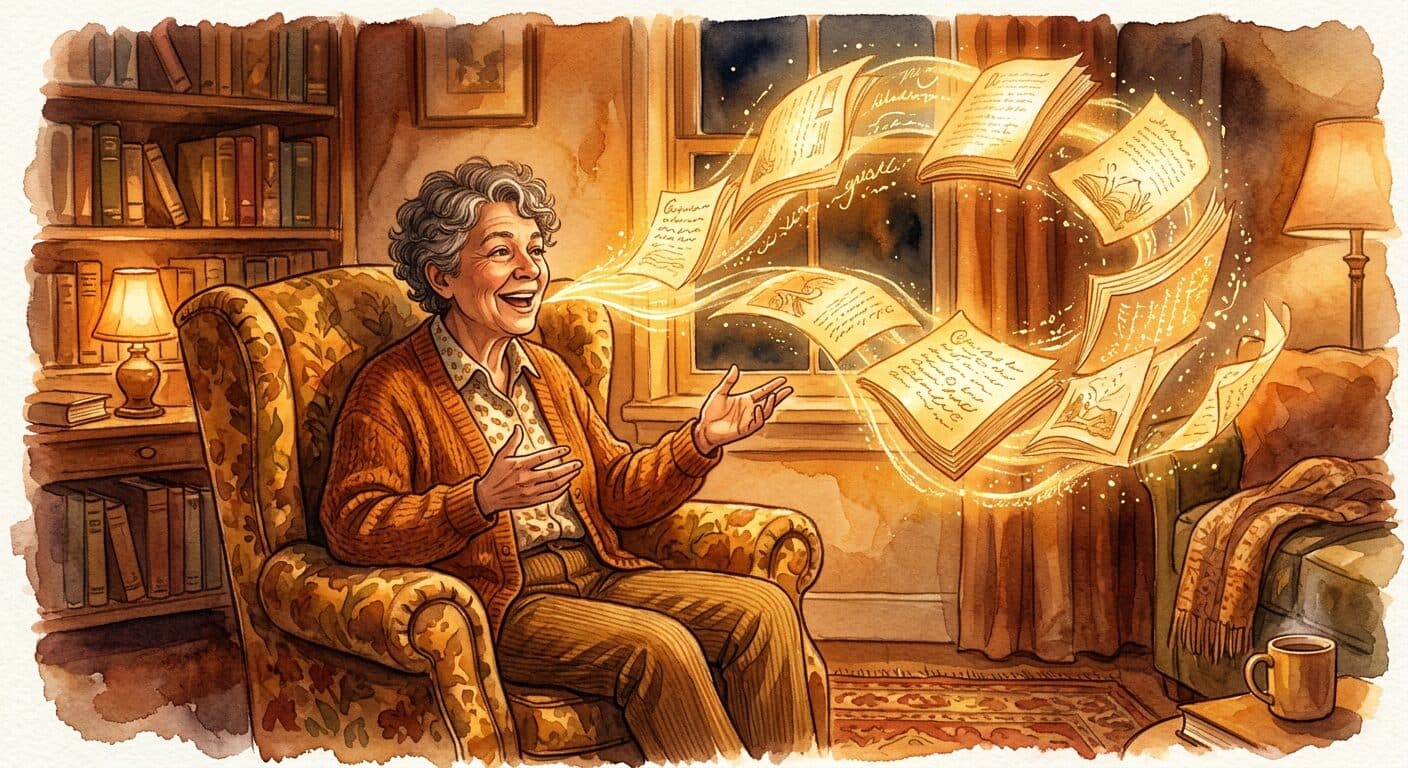
Millions of people want to write their life story. The desire is almost universal: leave something behind, give your family a window into where they came from, make sense of everything you have lived through. And yet, most people never start. The barrier is not a lack of memories. It is the process itself: how to structure decades of experience, how to write it well, how to turn messy recollections into something worth reading. The good news is that the tools have finally caught up with the intention.
The Gap Between Wanting to Write and Actually Writing
Surveys consistently find that the majority of older adults want to record their life story. Just as consistently, only a small fraction ever do. The reasons are remarkably similar. People feel they are not "writers." They do not know where to begin. They start with enthusiasm, write a few pages, and stall because the task feels enormous. Or they worry that their story is not interesting enough, which is almost never true.
The gap is not about desire or material. It is about process. Writing a book requires a specific set of skills (structuring, drafting, editing, pacing) that most people have never practiced. For decades, the only way to bridge that gap was to hire a ghostwriter, take a writing course, or simply push through on willpower. Most people chose a fourth option: do nothing, and hope someone asks them about it someday.
What "Help" Actually Looks Like
When people hear that technology can help them write their life story, they often imagine something impersonal. A machine that spits out generic text. That is not what modern tools do. The best ones listen to your memories, understand your voice, and handle the parts of writing that require craft rather than lived experience: structure, pacing, grammar, narrative arc.
Think of it this way: you are the architect. You decide what the house looks like, where the rooms go, what matters most. The technology is the builder. It takes your vision and constructs it with precision and skill you might not have on your own. The result is your design, built properly.
You remain the author in every meaningful sense. The memories are yours. The emotions are yours. The voice is yours. What changes is that you no longer need to also be the editor, the writing coach, and the book designer.
Speak Your Memories Instead of Writing Them
The single biggest unlock in modern memoir writing is voice. Instead of sitting in front of a blank page, you simply talk. Tell a story the way you would tell it to a friend over coffee. Five minutes of speaking produces richer, more emotionally honest material than most people manage in an hour of writing.
This is not a small difference. When people write, they tend to summarize. "We moved to the new house in 1974." When they speak, they tell. "The new house had this enormous garden, and I remember standing at the back door thinking I had never seen so much green in my life." Speaking bypasses the self-censoring instinct that makes people flatten their own stories on paper.
If the idea of writing feels intimidating, our guide on writing your life story with no writing experience explains why you already have the only skill that matters.
A Team That Learns How You Tell Stories
The most sophisticated tools do not just transcribe what you say. They learn how you tell stories and shape the result to match. Journtell's Story Team, five specialized roles working together, does exactly this:
- The Interviewer asks follow-up questions tailored to what you just shared, drawing out the details that turn a summary into a vivid scene.
- The Voice studies how you speak, your rhythm, your favorite phrases, your tendency toward humor or understatement, and makes sure the written story sounds like you.
- The Heart learns how you process emotions so the story feels authentically yours, whether you express feeling through humor, through silence, or through direct honesty.
- The Writer handles structure, pacing, and prose, turning your raw material into something that reads beautifully on the page.
- The Archivist organizes your stories across the themes and periods of your life, so that over time they build into a coherent book rather than a scattered collection.
The result is a polished story that your family will want to read, but that still sounds unmistakably like you. For a deeper look at how this process works, see our article on how technology helps you write your life story.
What You Keep Control Of
The most common concern people have is: "Will it still be my story?" The answer is an unqualified yes. You choose which memories to share. You review every story before it becomes part of your book. You can edit anything, reject anything, or redirect the process at any point.
Nothing is published or shared without your explicit approval. The technology proposes; you decide. If a story does not capture the moment the way you remember it, you say so, and it gets reworked. Your life, your voice, your final say.
This is fundamentally different from handing your memories to a ghostwriter and hoping for the best. You remain in the room for every decision, without needing to do the heavy lifting of the writing itself.
Who This Is For (And Who It Is Not For)
These tools are ideal for people who have always wanted to preserve their life story but found the writing process too intimidating, too time-consuming, or simply not their strength. If you are more comfortable talking than typing, if you have stories you want to pass down but no idea how to structure a book, if you have tried and stalled before, this is built for you.
It is less suited for people who genuinely enjoy the craft of writing. If you find satisfaction in choosing every word, in the slow work of revision, in the creative challenge of wrestling a blank page, then the process itself is part of the reward, and these tools would take that away. For those writers, our complete guide to writing your life story is a better starting point.
For everyone else, the technology removes the obstacles and lets you focus on what only you can provide: the memories themselves.
Your Memories Are the Hard Part. You Already Have Those.
Every life story requires exactly one irreplaceable ingredient: a life, lived and remembered. No tool can manufacture your childhood, your marriage, your triumphs and regrets and quiet Tuesday afternoons. Those are yours alone.
Everything else, the structure, the grammar, the narrative arc, the beautiful formatting, can be handled. The hard part is already done. You lived it. Now all you need to do is tell it. Start your life story for free.
Ready to write your life story?
Journtell makes memoir writing effortless. Just speak or type your memories, and your Story Team turns them into a beautifully written book.
Start Writing Free