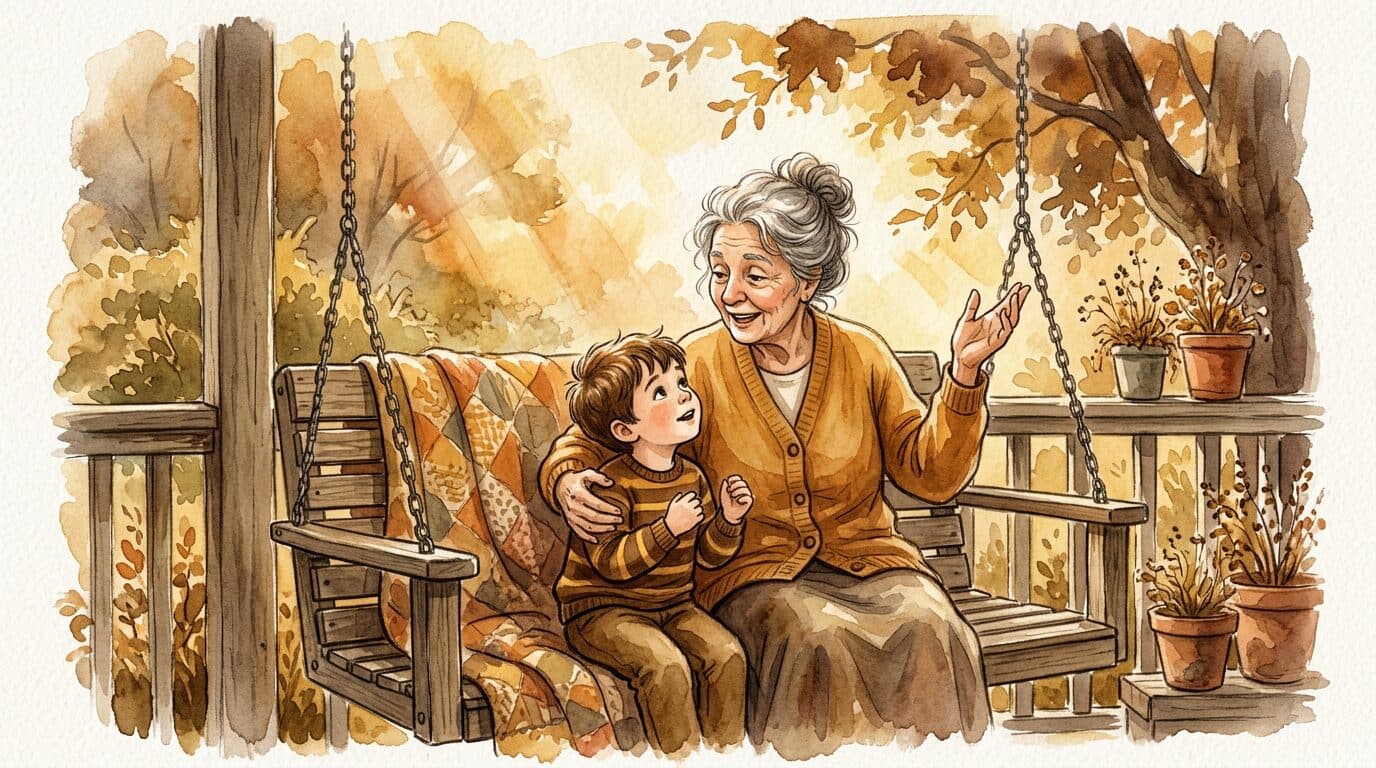
If you are a grandparent thinking about sharing your life story, you have probably had this thought: "What would they even want to know?" You imagine your grandchildren politely listening to stories about a world they cannot relate to, nodding along, trying not to look at their phones.
You are wrong about what they want to hear. And you are wrong about how much they care.
Researchers who study intergenerational storytelling have found something consistent: young people are deeply interested in their grandparents' lives. But the stories they crave are not the ones most grandparents think to tell. They do not want a timeline. They want to know what it felt like.
They Do Not Want Facts. They Want Feelings.
When grandchildren are asked what they want to know about their grandparents, their questions almost never start with "what year" or "how many." They start with "what was it like" and "how did you feel" and "were you ever scared."
Here is what they actually ask:
What were you afraid of when you were my age? This is consistently one of the most requested topics. Young people want to know that fear is normal, that even the person they see as strong and settled was once uncertain. Your answer to this question tells them more about you than any resume ever could.
Did you ever get in trouble? They want to know you were not always the responsible adult they see at holidays. The time you snuck out. The rule you broke. The detention you earned. These stories are not confessions. They are proof that you were once young, imperfect, and figuring it out, just like them.
What was your first love like? Not the sanitized version. The real one. The butterflies, the awkwardness, the heartbreak. Young people navigating their own relationships want to know that the feelings they are experiencing are not new, that someone they trust went through the same thing and came out the other side.
What is the hardest thing you ever went through? This question comes from a genuine desire to understand resilience. They are not asking for entertainment. They are asking: how did you survive something difficult? What did it teach you? How did you keep going?
What do you wish you had done differently? Regret is one of the most connecting emotions there is. When you share something you wish you had handled differently, you give your grandchild permission to be imperfect. You also give them wisdom they can actually use, disguised as a story rather than a lecture.
The Stories They Never Tire Of
Beyond these questions, certain types of stories consistently captivate younger listeners:
How you and Grandma/Grandpa met. The love story of their grandparents is endlessly fascinating to young people, partly because it is romantic and partly because it explains their own existence. Tell the unpolished version. The awkward first date. The misunderstanding. The moment you knew.
What their parent was like as a child. Nothing delights a grandchild more than hearing that their parent, the person who tells them to clean their room and do their homework, was once a chaotic, mischievous, homework-avoiding child themselves. These stories change the family dynamic in the best possible way.
What daily life was actually like. Not the big events, but the texture of ordinary life. What did you eat for breakfast? What did you do after school? How did you spend a Saturday? What did your neighborhood look like? These details paint a world that feels exotic to someone who has never known life without the internet, and they are the details that disappear first from family memory.
The small moments that changed everything. The chance encounter. The decision made on a whim. The day you almost did something different. Young people are fascinated by how lives are shaped by small, unpredictable moments rather than grand plans.
Why They Do Not Ask
If grandchildren want to know all of this, why do they not just ask? For the same reason you do not just tell: the conversation feels awkward to initiate. They do not want to seem intrusive. They do not know what is appropriate to ask. They worry about bringing up painful topics. And, frankly, they assume you would offer the stories if you wanted to share them.
This creates a quiet standoff where both sides are waiting for the other to start. Someone has to go first. It might as well be you.
How to Tell Stories They Will Actually Remember
The stories that stick are not the ones with the most dramatic events. They are the ones with the most specific details. Compare these two versions:
"I grew up during the Depression and times were tough."
"We ate oatmeal for dinner three nights a week because that was what we could afford, and my mother would put a little cinnamon on it and call it dessert, and we believed her."
The second version is the one your grandchild will remember and retell. Specific details (the oatmeal, the cinnamon, the word "dessert") create images. Images create memories. Memories create connection.
You do not have to be a storyteller to do this. You just have to be specific. Instead of "we were poor," describe what poor looked like. Instead of "I loved your grandmother," describe the moment you realized it. Instead of "I was nervous on my first day of work," describe what you wore, what your hands were doing, what the building smelled like.
If you are looking for more starting points, our collection of 100 life story prompts organized by decade can help you find the stories worth telling. And our guide to family interview questions includes the kinds of questions your grandchildren would ask if they knew how.
The Gift They Cannot Buy
Your grandchildren can find anything on the internet. They can look up historical events, watch documentaries about the era you grew up in, read about the cultural shifts you lived through. What they cannot find anywhere is what it was like for you, specifically, in your specific family, in your specific town, with your specific fears and joys and heartbreaks.
That is what makes your story irreplaceable. Not because you are famous or extraordinary, but because you are theirs. You are the only person alive who knows what their family sounded like, smelled like, and felt like in a time before they existed. That knowledge dies with you unless you share it.
If you are wondering whether your grandchildren would actually value a book of your stories, consider this: the most common regret people express about their grandparents is not "I wish I had visited more" or "I wish I had bought a better gift." It is "I wish I had asked them more questions while I still could."
You can answer those questions now, before they are asked, and leave your grandchildren a gift no one else can give them. With Journtell, you simply speak your memories. Your Story Team (five specialized roles working together) shapes each one into a polished story that still sounds like you. Over time, those stories become a book your grandchildren will read, reread, and pass to their own children. Start sharing your stories today.
Ready to write your life story?
Journtell makes memoir writing effortless. Just speak or type your memories, and your Story Team turns them into a beautifully written book.
Start Writing Free