You have done something remarkable. You have recorded your memories, shaped them into stories, and compiled them into a book. Months of reflection, vulnerability, and effort sit in your hands as a finished life story. Now comes a moment that catches many people off guard: sharing it.
The book was always for your family. But handing it to them feels different than writing it. Suddenly, every story feels too personal. Every admission feels too raw. Every memory you chose to include (or leave out) feels like it could be questioned. This is normal. And this guide will help you navigate it.
Choose How, Not Just When
There are several ways to share your life story book, and the right approach depends on your family dynamics, the content, and your own comfort level.
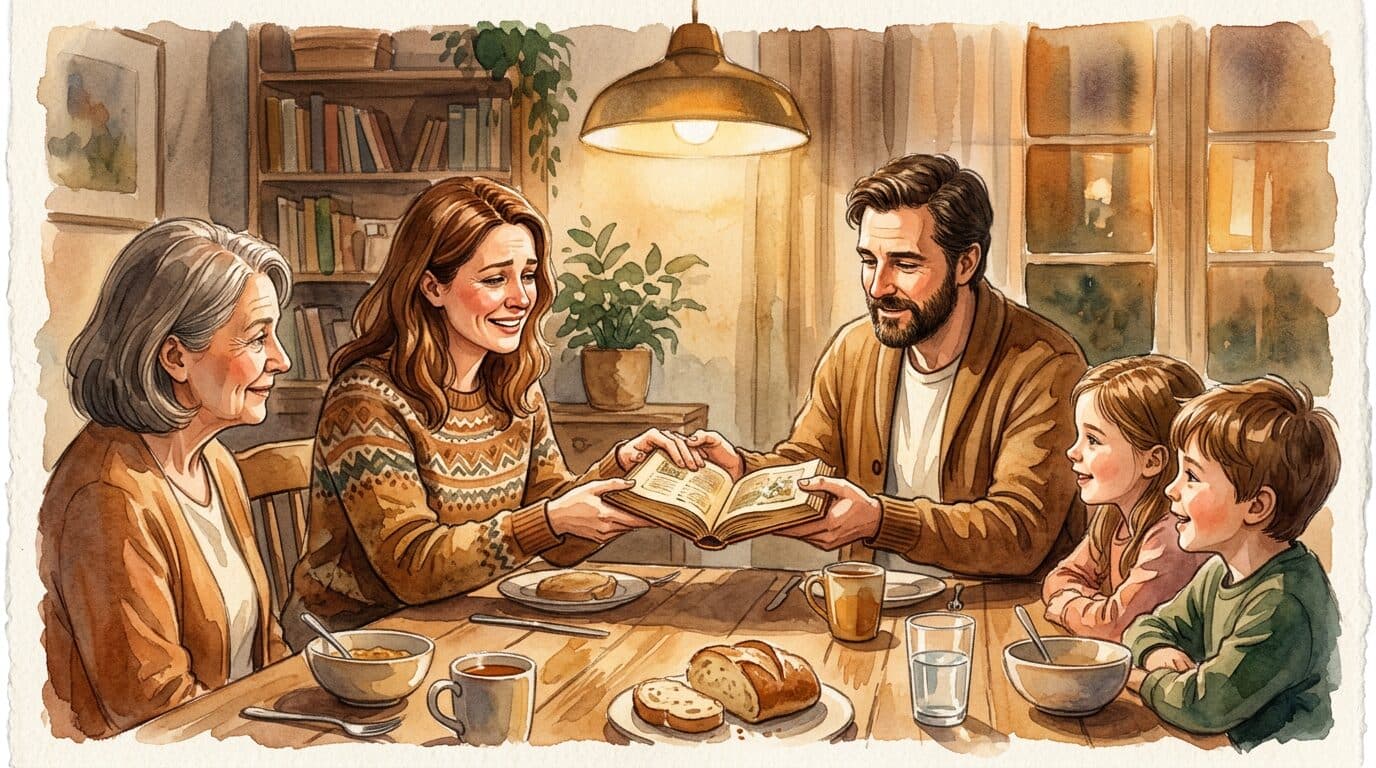
The family gathering. A birthday, holiday, or reunion is a natural occasion. You present the book to the family as a group, perhaps with a short explanation of why you wrote it and what it means to you. This approach makes the sharing feel celebratory and gives everyone a shared moment to remember.
The advantage is the collective experience. Watching family members read the same passage and react together creates a powerful moment. The disadvantage is that you might feel exposed with everyone's attention on you, and some family members may need privacy to process their emotions.
Individual copies, given privately. Give each person (or household) their own copy, perhaps with a brief personal note inside the cover. This lets each person read at their own pace, in their own space, without the pressure of a group reaction.
This approach works especially well if your book includes difficult or deeply personal material that family members might need time to absorb. It also allows each person to have their emotional response privately, which some people strongly prefer.
Digital sharing. If your family is geographically scattered, sharing a digital version first can bring everyone in at the same time, even across time zones. You can follow up with printed copies later. The digital version lets you share immediately while the physical copies make it permanent.
What to Say When You Present It
You do not need a speech. A few honest sentences are enough:
"I have been working on this for a while. It is my life story, or at least the parts I wanted to share. I wrote it because I wanted you to know where you come from. Some of it is happy. Some of it is hard. All of it is true, as best as I can remember."
That is it. You do not need to justify, explain, or apologize. The book speaks for itself.
If there are specific stories that might surprise or challenge certain family members, you might mention that privately, in advance. "There is a chapter about your father that you might find hard to read. I included it because it is part of the story, and I wanted to be honest. If you have questions, I am here."
Managing Emotional Reactions
A life story book triggers emotions. Sometimes tears. Sometimes laughter. Sometimes uncomfortable silence. Sometimes all three in the same afternoon. Here is what to expect and how to handle it.
Tears are not a problem. If someone cries while reading your story, they are not upset. They are moved. Let them feel it. Do not rush to comfort or deflect. The tears mean the story reached them, and that is exactly what you hoped for.
Questions will come. Family members will want to know more about certain stories. They will ask follow-up questions, challenge details, and share their own memories of the same events. This is wonderful. It means the book has started a conversation, which is one of its deepest purposes.
Not everyone will react immediately. Some people need time. They will read the book privately, think about it for days or weeks, and then come to you with their response. Do not interpret silence as indifference. Some of the most meaningful reactions come weeks after the book is shared.
Disagreements are possible. If you wrote about a shared experience, someone may remember it differently. This is not a crisis. It is a natural feature of memory. You can acknowledge their version without undermining yours: "That is how I remember it. Your version is probably true too."
Making It an Event
If you want the sharing to feel special, consider these touches:
Write a personal inscription in each copy. Even a single sentence makes the book feel like a gift rather than a distribution.
Read one short passage aloud. Choose something warm and universal, not the most emotionally intense story. The one about the summer vacation. The one about the family dog. Something that makes everyone smile and sets the tone.
Have photos on hand. If your book references old photographs, having the actual photos available for people to pass around creates a richer experience. "That is the house I am talking about on page twelve."
Leave space for conversation. Do not share the book and then rush to the next activity. Let people sit with it. Let the stories breathe. Some of the best moments will come from the conversations the book sparks, not the book itself.
What If You Are Nervous
Almost everyone who shares a life story book is nervous. You are handing someone the inside of your life and asking them to hold it gently. That is a vulnerable act, even among people who love you.
Remember why you did this. You did not write your life story to impress anyone. You wrote it so that the people who come after you would know who you were. That purpose is bigger than your nervousness, and your family will recognize the courage it took.
If you have not yet started your life story but the idea of someday sharing it with your family motivates you, our guide on how to write your life story can help you begin. And if you are helping a parent or grandparent with their story, our guide on helping parents write their life story covers how to support them through the process.
The Book That Gets Passed Down
Here is what happens after you share your life story book: it becomes the most treasured object in your family. Not because it is beautifully bound or expertly written, but because it is irreplaceable. No other book in the world contains these stories, in this voice, about these people.
It will be read at holidays. Quoted at weddings. Shown to new family members. Read aloud to grandchildren who are too young to understand the words but old enough to love the sound of your voice in the sentences. Years from now, it will be the thing your family reaches for when they want to feel close to you.
With Journtell, sharing is built into the process. Your finished book can be shared digitally with family members anywhere in the world, or prepared for printing. The stories you speak become a book your family will hold onto forever. If you are ready to start, create your account today and begin building the most meaningful gift your family will ever receive.
Ready to write your life story?
Journtell makes memoir writing effortless. Just speak or type your memories, and your Story Team turns them into a beautifully written book.
Start Writing Free