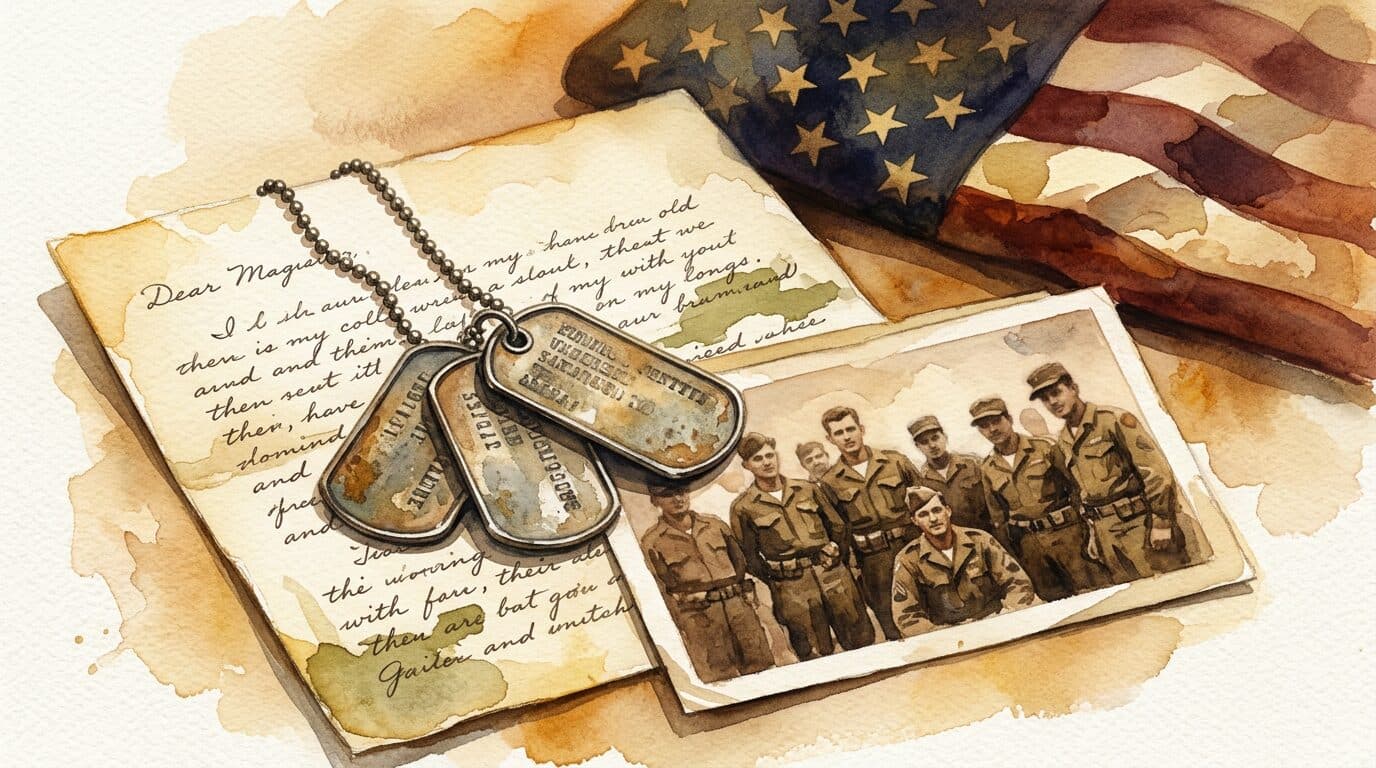
The veteran in your family has stories. You know this because occasionally, in the right moment, one slips out. A name from a faraway place. A detail about a deployment that lasted three sentences before the subject changed. A quiet comment about something that happened a long time ago, mentioned once and never again.
Military stories are some of the most important family stories that exist, and they are among the least likely to be told. Not because veterans do not want to share, though some do not, but because the telling is complicated in ways that civilian stories are not.
If you are a veteran considering your own story, or a family member hoping to help preserve one, this guide is for you.
Why Military Stories Are Different
Veterans face unique barriers to storytelling that most civilians do not fully appreciate.
The audience gap. Many veterans feel that civilians cannot understand what they experienced. This is not arrogance. It is a genuine communication challenge. The vocabulary, the context, the emotional landscape of military service are so far from everyday life that veterans often feel they would have to explain so much background that the story itself would get lost. So they do not bother.
The weight of difficult experiences. Some military stories involve trauma, loss, or moral complexity that veterans have spent years processing (or deliberately not processing). Asking someone to revisit those experiences requires sensitivity and respect for their boundaries. Our guide on writing about difficult memories covers this in depth.
The culture of understatement. Military culture often values stoicism and modesty. "It was not a big deal" is how many veterans describe experiences that were, by any objective measure, extraordinary. They minimize because that is what they were trained to do, and asking them to present their experiences as remarkable can feel uncomfortable.
Classified or sensitive information. Some stories involve details that veterans are not free to share, even decades later. This creates frustrating gaps in the narrative that the storyteller cannot explain without explaining what they cannot talk about.
What to Preserve
Military stories are not just combat stories. The service experience is rich and varied, and the non-combat memories are often the ones that surprise families most.
Training and early days. The shock of basic training. The first time they were away from home. The friendships formed under extreme conditions. The moment they realized what they had signed up for.
Daily life. What they ate. Where they slept. What they did on downtime. The routines, the boredom, the improvisation. These details paint a picture of a world most civilians have never seen.
The people. Fellow service members who became lifelong friends, or who were lost. Commanding officers who made an impression, for better or worse. The characters, the heroes, the people who kept everyone sane.
Homecoming. What it was like to come back. The adjustment. The things that were different, both in the world and in themselves. The difficulty of explaining where they had been and what it meant.
What service taught them. Discipline, leadership, perspective, resilience. The values they carried home and built their civilian lives on. These lessons are often the stories their families value most.
How to Start the Conversation
If you are a family member, approach with respect and without pressure.
Do not open with big, heavy questions. "Tell me about the war" is too broad and too loaded. Instead, start small and specific:
"What was your first day of basic training like?"
"Did you have a best friend in your unit?"
"What was the food like?"
Small questions feel safe. They open doors without forcing anyone through them. If a small question leads to a bigger story, follow it. If it does not, let it be. The goal is to create an environment where sharing feels natural, not obligatory.
Some veterans will never want to share certain stories, and that boundary must be respected absolutely. A life story that includes the parts they are comfortable sharing is still an invaluable document. It does not need to be complete to be important.
Voice Recording Removes the Biggest Barrier
Many veterans who would never sit down to write a memoir will happily talk about their experiences in conversation. The writing barrier is the primary obstacle for most people, but it is especially significant for veterans, who tend to be doers rather than writers.
Voice recording changes the equation entirely. Instead of asking them to write, you are asking them to talk. And talking, in the right setting with the right questions, is what many veterans have been waiting to do. They just needed someone to ask and a way to capture it.
With Journtell, the veteran simply speaks their memories. Their Story Team preserves the way they naturally tell stories, including the understatement, the dark humor, the precision of language that military experience produces, and shapes each memory into a polished story that still sounds like them.
For the Veteran Considering Their Own Story
If you are a veteran reading this, you have likely dismissed the idea of recording your story for one of the reasons above. Your life is not interesting enough. You are not a writer. Nobody would want to hear it. The parts worth telling are the parts you cannot or do not want to share.
Consider this: your family already wants to know. They are already curious about the years you do not talk about. And the parts you can share, even the mundane ones, paint a picture of who you were in a period of your life that shaped everything that followed.
You do not have to tell the hardest stories. You do not have to be comprehensive. You do not have to write a word. You just have to talk, about whatever parts of your service you are comfortable sharing, and let the rest take care of itself.
For practical advice on getting started, our guide on writing your life story with no experience covers how to begin without any writing background. And our collection of tips for recording stories includes techniques that work well for people who are more comfortable speaking than writing.
Your service was part of your life story. Your family deserves to know what they can about it, and you deserve to have it preserved. Start sharing your story today.
Ready to write your life story?
Journtell makes memoir writing effortless. Just speak or type your memories, and your Story Team turns them into a beautifully written book.
Start Writing Free