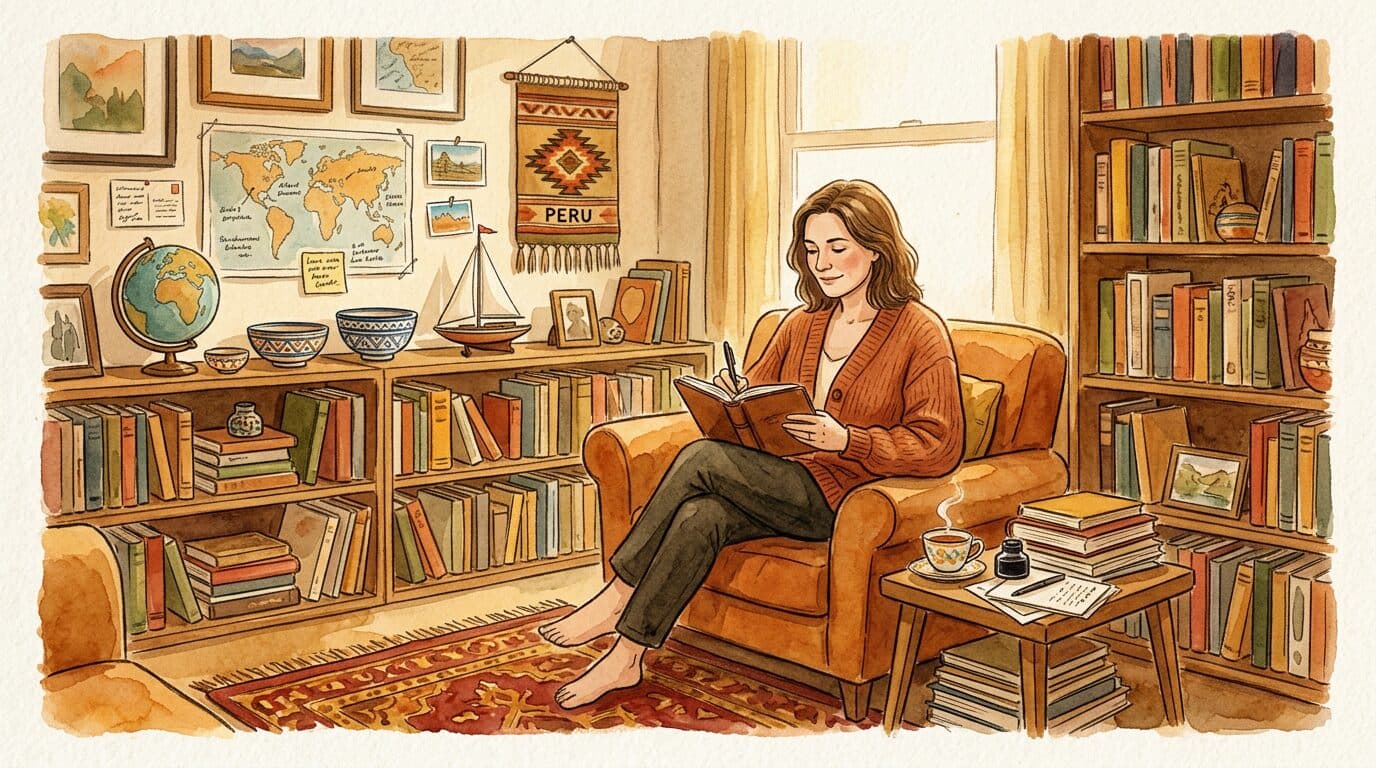
The most common reason people give for writing their life story is "for my children and grandchildren." This framing, however well-intentioned, accidentally excludes millions of people whose lives are equally rich, equally meaningful, and equally worth preserving, but who do not have children to pass their stories to.
If you do not have children, your life story is not less valuable. It is differently directed. And it matters just as much.
Your Story Is Not Just for Descendants
The assumption that a life story exists for the next generation is limiting. A life story exists for anyone who cares about who you were and how you lived. That audience is larger than you think.
Nieces and nephews. If you have siblings with children, those children benefit enormously from knowing the full family story, including the aunts and uncles who shaped the family's character. Your perspective on shared family events is different from their parents' and adds depth to the family archive.
Friends. Deep friendships are among the most important relationships in a life, and friends value knowing your full story as much as family does. A life story shared with close friends becomes a document of the relationship itself, and of a shared era that only the people who lived it can describe.
Communities. If you have been part of a church, a volunteer organization, a professional community, or a neighborhood for decades, your stories are part of that community's history. The things you witnessed and contributed to matter beyond your personal circle.
Yourself. A life story is not just a legacy. It is an act of reflection. The process of reviewing your life, finding the patterns, acknowledging the losses, and recognizing the meaning, is valuable regardless of whether anyone else ever reads it. Many people find that the writing itself is the gift, not the finished product.
The Stories Only You Can Tell
Every life contains stories that only the person who lived it can tell. Your particular combination of experiences, observations, humor, and wisdom exists nowhere else. A life without children is not a life without stories. It is often a life with more time for experiences that parents did not have: travel, career depth, creative pursuits, community involvement, self-discovery.
These experiences are not consolation prizes. They are full, meaningful lives that deserve the same preservation as any other. The assumption that a life needs children to be "worth writing about" is as absurd as assuming a novel needs a sequel to be worth reading.
Deciding Your Audience
When you write your life story without children as the assumed audience, you have the freedom to choose who you are writing for:
Write for the family archive. Even without your own children, your life story fills a gap in the family record. Your siblings' descendants will want to know who you were. The family tree includes you, and your branch has stories that belong in the larger narrative.
Write for a specific person. A godchild. A mentee. A friend's child who calls you "aunt" or "uncle." Writing for someone specific gives the project focus and emotional weight, and the recipient will treasure it as a deeply personal gift.
Write for a future reader you will never meet. Historical societies, libraries, and digital archives preserve personal narratives because they are primary sources for understanding how people actually lived. Your account of growing up in a particular place at a particular time has historical value that transcends your personal circle.
Write for yourself. The act of assembling your life into a coherent narrative is, for many people, one of the most meaningful things they ever do. It is not vanity. It is the human impulse to make sense of experience, to see the shape of a life while you are still living it.
What to Include
Without the "family legacy" framework, you have even more freedom to choose what goes in. Some life stories without children focus on:
The relationships that defined you. Friendships, romantic partnerships, mentorships, professional bonds. The people who shaped you, challenged you, and stood by you.
The work that mattered. Not a resume, but the stories behind the career. What you built, what you learned, what you would do differently.
The places that shaped you. Where you lived, traveled, and felt at home. The cities, the neighborhoods, the apartments, the landscapes.
The things you learned. Wisdom earned through experience. Not advice, exactly, but understanding. The things you know now that you could not have known at twenty.
The joys. The things that made your life good. The hobbies, the passions, the meals, the mornings, the specific pleasures that made your particular life worth living.
Permission to Tell Your Story
If you have ever felt that a life story is "not for someone like me," this is your permission to let that go. A life story is for anyone who has lived a life, and that is everyone. The value of your story is not determined by the number of people who will read it. It is determined by the honesty and specificity with which you tell it.
For understanding what makes any story worth telling, our guide on what makes a life story worth reading explains why specificity and honesty matter more than drama or legacy. And for the practical side of getting started, our complete guide to writing your life story walks through every step.
With Journtell, you tell your stories the way you would tell them to a friend. Your Story Team shapes each one into polished prose that preserves your voice. The result is a book that captures who you were, for whoever you choose to share it with, on your terms.
Your story matters. Not because of who might read it, but because you lived it. Start telling it today.
Ready to write your life story?
Journtell makes memoir writing effortless. Just speak or type your memories, and your Story Team turns them into a beautifully written book.
Start Writing Free