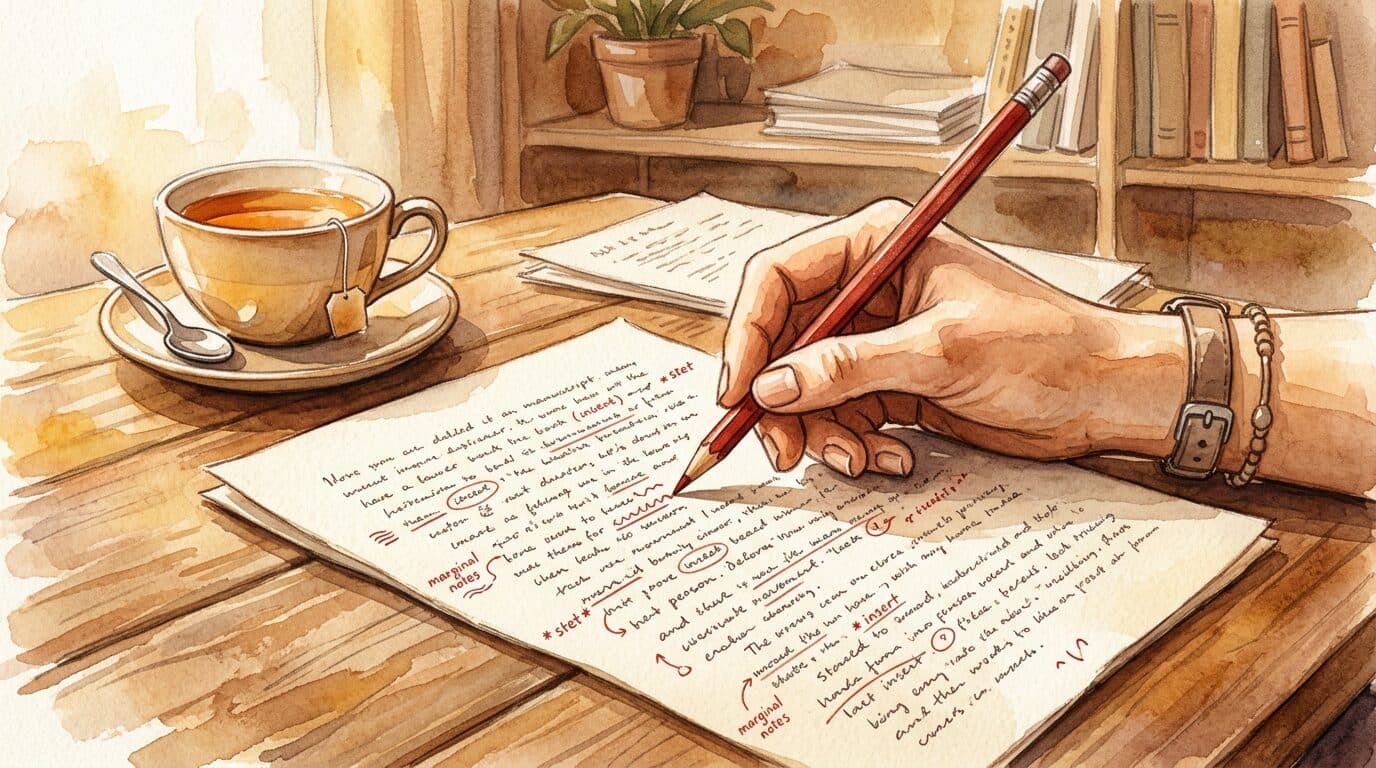
You have written a story from your life. Maybe you spoke it into a recorder and had it transcribed. Maybe you typed it out yourself. Either way, it exists. It is on the page. And now you are staring at it, wondering: is this good enough? Should I change things? How do I know when it is done?
If you are a professional writer, you have been answering this question for years. If you are not, and most people writing their life story are not, the question can be paralyzing. You do not want to share something sloppy, but you also do not want to polish it into something that no longer sounds like you.
Here is a practical guide to editing your life story, written for people who have never edited anything before.
The First Draft Is Supposed to Be Messy
Before you start editing, understand this: every first draft is rough. Every single one. Professional writers produce terrible first drafts. The difference between a professional and an amateur is not the quality of the first draft. It is the willingness to revise.
If your first version is rambling, repetitive, or unclear, that is normal. It means you got the story out, which is the hardest part. Everything else is refinement.
Read It Out Loud
This is the single most effective editing technique for non-writers. Read your story out loud, either to yourself or to someone you trust. Your ear catches things your eye misses. Sentences that look fine on screen sound awkward when spoken. Sections that seem clear turn out to be confusing. And the places where the story comes alive, where your voice is strongest, become obvious.
If you stumble over a sentence while reading aloud, that sentence needs work. If you get bored during a paragraph, your reader will too. If a section makes you laugh or tear up, even though you wrote it, keep it exactly as it is.
Cut the Warm-Up
Most stories start too early. Not too early in the timeline, but too early in the telling. The first paragraph or two are often the writer warming up, circling around the story before landing on it. "I have been thinking about this memory for a long time, and I am not sure why it stuck with me, but it happened in the summer of 1978..."
Find the sentence where the story actually begins and start there. "The summer of 1978, I was sixteen and convinced I was invincible." The reader does not need your preamble. They need the story.
Remove What Does Not Serve the Story
This is the hardest editing advice to follow, because everything in your story happened, and it feels wrong to leave real things out. But a good story is not a complete record. It is a shaped experience. Everything in the story should serve the story.
If you describe driving to the hospital and then describe the hospital room where your daughter was born, the driving part might not serve the story. Unless the drive itself was the story (the panic, the wrong turns, the running of red lights), it is just logistics. Cut it and start in the hospital room.
The question to ask yourself about any sentence or paragraph is: does the reader need this to understand the story? If the answer is no, consider removing it. You are not erasing the memory. You are shaping the telling.
Preserve Your Voice
The biggest risk in editing a life story is polishing away the personality. If you are a person who speaks in short, blunt sentences, your story should have short, blunt sentences. If you are someone who naturally tells long, winding stories with detours, your story should reflect that too.
Do not try to sound like a book. Sound like you. Your family does not want to read prose that could have been written by anyone. They want to read something that sounds like you sitting across the table from them, telling them about your life.
This is especially important if you used voice recording and had your story transcribed or shaped. Make sure the written version still sounds like something you would say. If a word or phrase feels foreign, change it back to the word you would actually use.
Fix Clarity, Not Style
When editing, focus on clarity rather than style. Ask yourself:
Can the reader follow what is happening? If you jump between two time periods without signaling, add a transition. "That was 1965. But the story really started ten years earlier, in my mother's kitchen."
Are the people clear? If you mention three sisters by name in one paragraph, the reader might get lost. Introduce people simply and remind the reader who they are if they have been absent for a while.
Is the ending doing its job? The last sentence of a story matters more than any other. It should land with a feeling, not trail off. If your story ends with "And that was that" or "So that is the story," look for a better final image. What is the last thing you see when you think about this memory? End there.
When to Stop
There is a point in editing where you are no longer making the story better. You are just making it different. You swap one word for another that is not really an improvement. You rearrange a paragraph and then rearrange it back. You add a sentence, delete it, add it again.
When you reach that point, stop. The story is done.
"Done" does not mean perfect. It means the story says what you wanted it to say, in a way that sounds like you, clearly enough that a reader can follow it. That is the bar. Not literary perfection. Not a polished manuscript. Just a story told honestly, in your own voice, that your family will be able to read and understand.
If you are writing your life story with no prior experience, our guide on writing your life story without writing experience covers the mindset shift that makes this easier. And for the complete process from start to finish, our complete guide to writing your life story walks through every stage.
Or Let Someone Else Handle the Editing
Not everyone wants to edit, and that is perfectly fine. With Journtell, the Writer role on your Story Team handles all the craft: shaping your raw memories into polished, readable stories while the Voice role ensures every sentence still sounds like you. You tell your stories, and your Story Team handles the rest.
Whether you edit yourself or let your Story Team do the heavy lifting, the goal is the same: stories that are clear, honest, and unmistakably yours. For a deeper look at how your life story comes together, our guide on how to organize your life story covers the bigger structural questions.
The best edit you can make is the one that gets the story finished and into the hands of the people who will treasure it. Start telling your story today.
Ready to write your life story?
Journtell makes memoir writing effortless. Just speak or type your memories, and your Story Team turns them into a beautifully written book.
Start Writing Free